
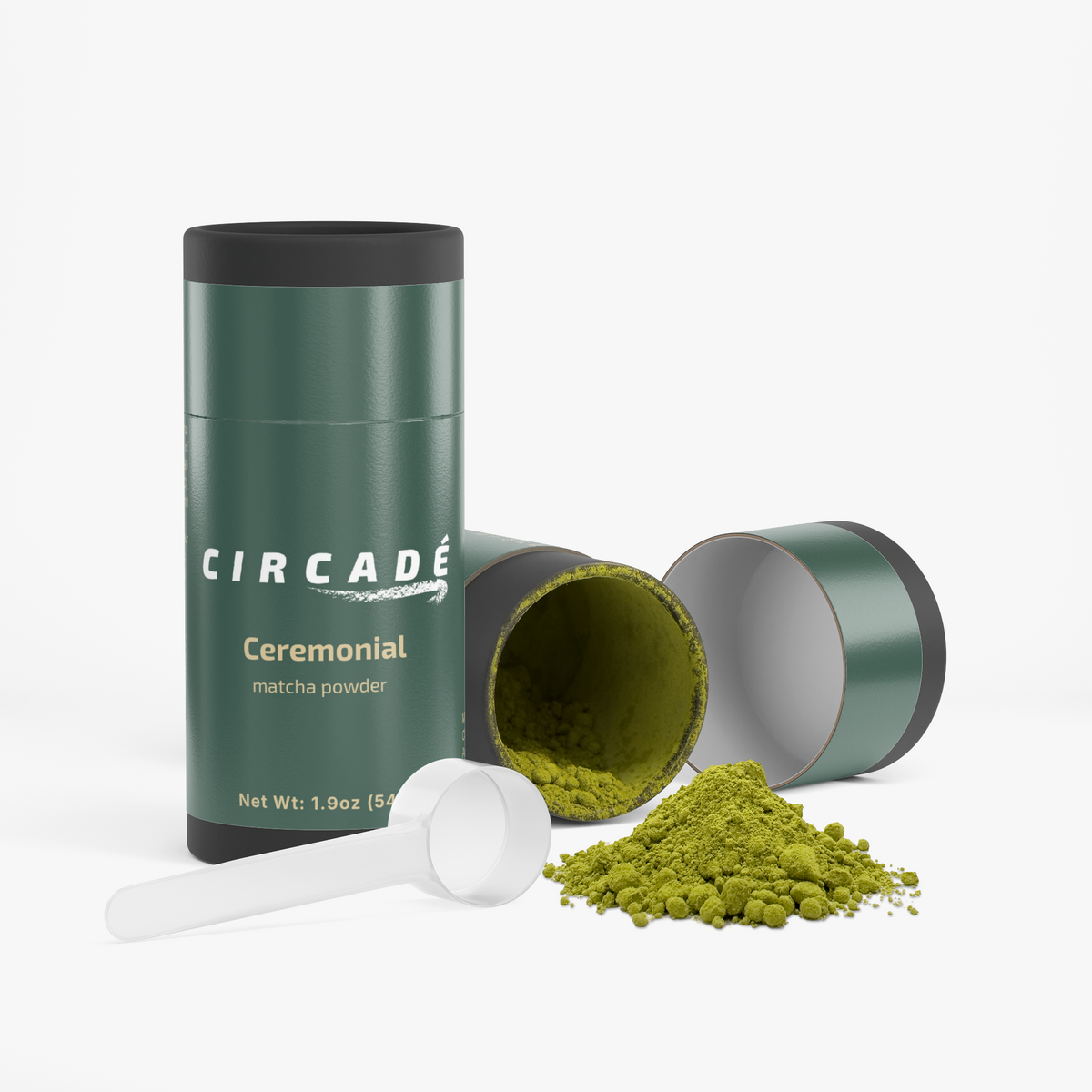
Choosing warm or iced matcha is mostly a question of taste, texture and the kind of morning you have. One may suit a slow breakfast, the other a drink you take to your desk. You can prepare both from the same powder without treating either as the more virtuous option.
Start with the tea, whichever format you choose
Circadé's Ceremonial Matcha Powder contains matcha tea powder without added sweeteners or flavourings. Its directions use a sifted teaspoon and water at around 70–80°C. Begin by mixing the powder evenly with a small amount of water, so dry pockets do not hide beneath milk or ice.
Whisk briskly in a zigzag, then check the bottom and sides of the bowl. A smooth base gives you a clearer comparison between formats. If the tea is lumpy in both versions, work on sifting and mixing before changing the amount of milk.
Choose warm matcha for a drink you can sip slowly
For a straightforward warm cup, add more warm water to the whisked base until the strength suits you. For a latte, add warm milk of your choice gradually and taste before adding anything else. Different milks bring their own flavour and sweetness, even when you use the same tea.
Heat the milk according to its packaging and your equipment instructions. Avoid filling a small mug to the rim before frothing, and leave room to stir. A lightly foamed top is optional; you can make a satisfying cup without recreating a café presentation.
Plan for dilution when making iced matcha
Mix the tea before pouring it over ice. Starting with dry powder in a glass of cold milk makes it harder to see and break up the clumps. Put the ice and milk in a sufficiently large glass, then add the prepared tea and stir through.
Ice melts, particularly when the tea base is still warm. Use a modest amount of mixing water so the finished drink is not diluted twice. If you prefer a softer flavour, add more milk deliberately rather than relying on a half-melted glass of ice to change it for you.
Compare one change at a time
Try the same milk and amount of powder in each version before deciding which you prefer. Note whether it is the temperature, the strength or the texture that makes the difference. Next time, change only that part of the preparation. This is more useful than altering every ingredient and losing track of what worked.
Both drinks contain caffeine because the powder does. Cold preparation does not make matcha caffeine-free. Choose a time that suits your own sensitivity, and explore the AM Ritual collection for a morning format that fits around breakfast and the rest of your day.

Leave a comment
This site is protected by hCaptcha and the hCaptcha Privacy Policy and Terms of Service apply.