
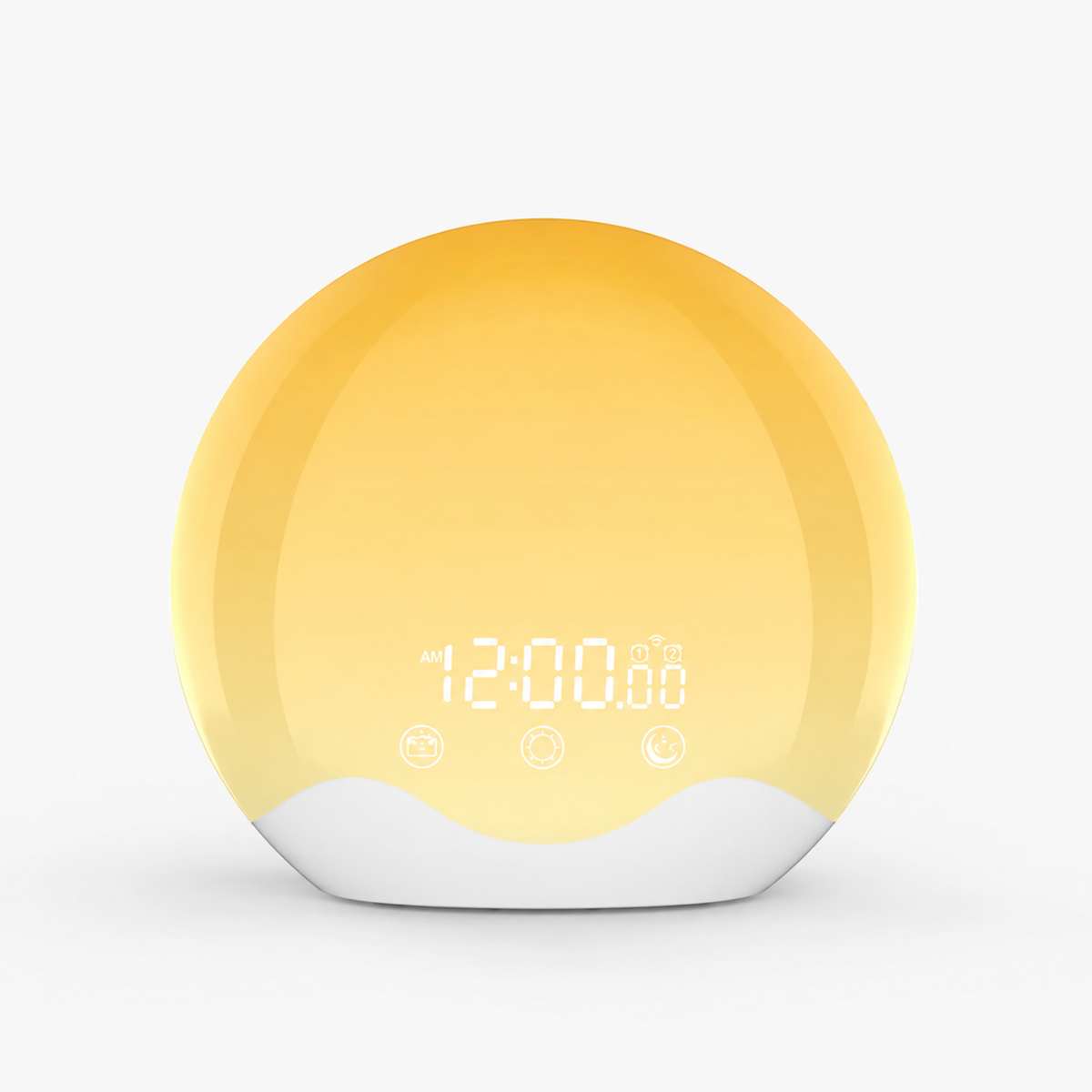
If your alarm makes you jump out of your skin every morning, you've probably wondered whether a sunrise alarm clock is worth it. Here's an honest look at how they work, who gets the most out of them, and what to look for.
What is a sunrise alarm clock?
A sunrise alarm clock, sometimes called a wake-up light, gradually brightens your bedroom before your set wake time. It usually starts with a deep red glow, moves through orange and finishes on bright, warm white, imitating a natural sunrise over 20 to 40 minutes. Most also play a gentle sound at the end in case the light alone doesn't wake you.
How does a sunrise alarm clock work?
Light is the main signal your body clock uses to tell morning from night. Even through closed eyelids, a slowly brightening room sends that signal. Instead of going from deep sleep to a blaring noise in a second, you surface more gradually, which many people find makes mornings feel less abrupt.
Do sunrise alarm clocks actually work?
For a lot of people, yes, especially if:
- You wake up before it's light outside. UK winters mean many of us are up in darkness from October to March.
- You sleep in a very dark room. Blackout blinds are great for sleeping but make waking harder.
- You hit snooze repeatedly. A gentler start can make getting up feel less of a battle.
- You share a bed. Discuss the light and sound settings together; both can be noticeable to someone else in the room.
They're less noticeable if you already wake to bright daylight streaming in. In summer, nature is doing the job for you.
What to look for in a sunrise alarm clock
Adjustable sunrise length
Being able to set how long the sunrise lasts lets you find what suits you. Thirty minutes is a good starting point.
Brightness that goes high enough
A light that only reaches a dim glow won't do much in a dark room. Look for a wide brightness range.
A sunset mode
A reverse sunrise that dims slowly at bedtime is useful for winding down, replacing the harsh overhead light.
Gentle sounds and white noise
Natural sounds to finish the sunrise, plus white noise for falling asleep, mean one device can replace several.
Simple controls
You'll be using it half-asleep. Big, clear buttons beat complicated apps.
The Circadé Sunrise Alarm Clock lists gradual wake lighting, adjustable colours and brightness, evening lighting, sound options and a sleep timer. Check the supplied manual for the available sunrise controls.
How to get the most out of a sunrise alarm
- Place it on a stable bedside surface using the distance and clearance guidance in its manual.
- Keep the same wake time every day, weekends included.
- Use the sunset setting instead of scrolling your phone in bed.
- Open the curtains as soon as you're up to keep the light signal going.
Frequently asked questions
Can a sunrise alarm wake a heavy sleeper?
Some people need an audible alarm as well as light. Check the available settings and use a reliable backup when necessary; do not assume the gradual light will wake every sleeper.
Will it disturb my partner?
The light fills the room, so they will notice it. Most couples find it far less jarring than a loud alarm.
Is a sunrise alarm good for kids and teenagers?
Check the manufacturer’s age and use guidance before choosing an electrical bedside device for a child. Ask about suitability for the child’s age before buying.
Ready for calmer mornings? Take a look at the Sunrise Alarm Clock.


Leave a comment
This site is protected by hCaptcha and the hCaptcha Privacy Policy and Terms of Service apply.